2BAB's Blog
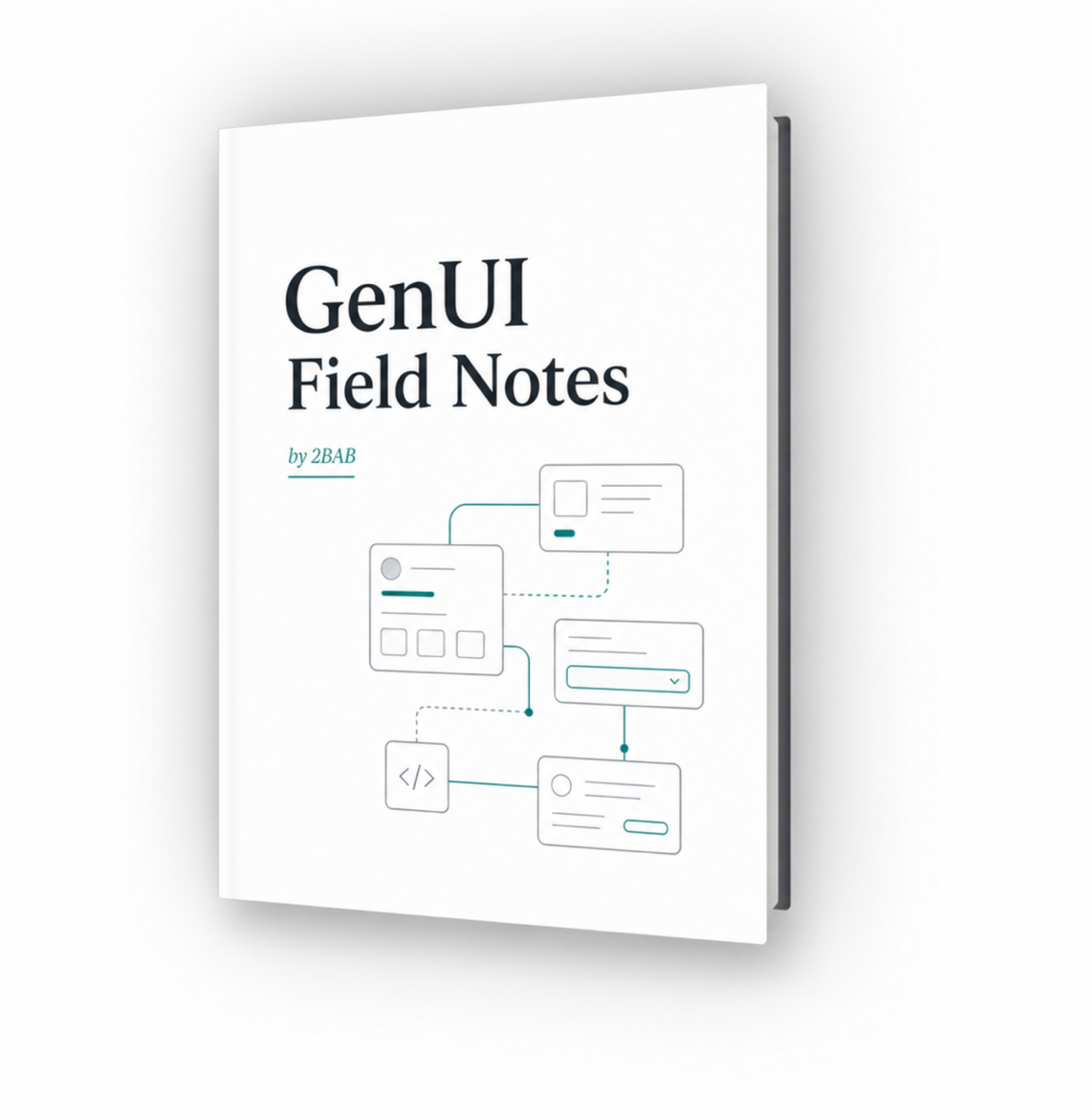
GenUI Field Notes
GenUI Field Notes is a compact, open-source minibook collecting current observations on Generative User Interfaces. It starts from chat-like GenUI, the product form shared by many early experiments, then follows three concrete approaches: OpenUI / Thesys C1, Google A2UI, and the GenUI support in Vercel AI SDK.
Across nine chapters, the minibook traces the engineering path from generation to interaction: what the model receives and emits, how a renderer/runtime handles components, data, actions, and streaming updates, and how a user's next action enters another Agent Run. The comparisons separate UI expression from runtime behavior, helping readers reason about component boundaries, trusted data, state recovery, approvals, failures, and observability through real implementations.
The minibook is available in English, Simplified Chinese, and Traditional Chinese (Taiwan). It is open source, and contributions are welcome. Read it online.
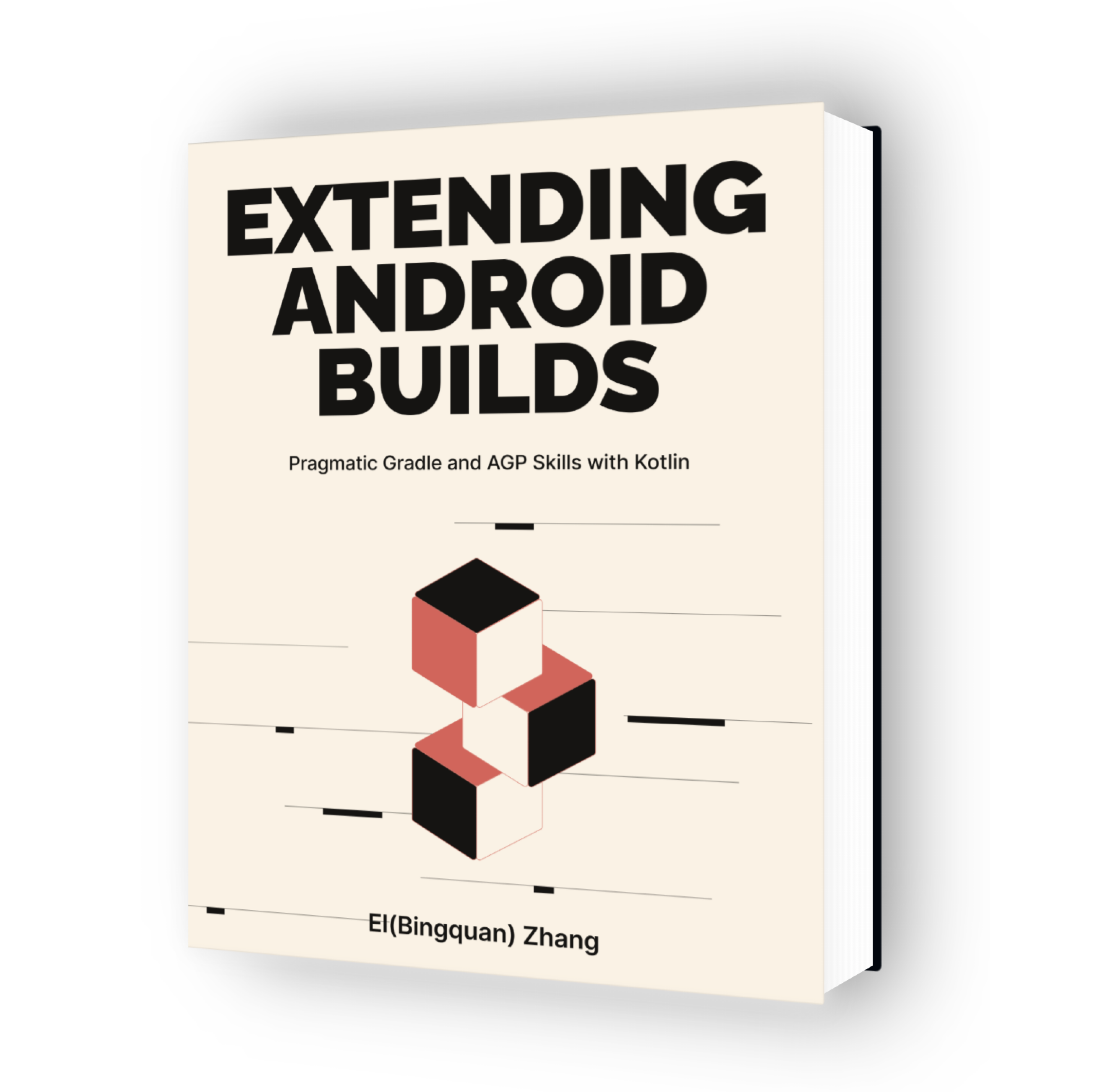
Extending Android Builds (1st Edition, April 2024)
Extending Android Builds goes beyond the Gradle configuration, it targets the intermediate level and introduces Gradle Plugin development along with the Android Gradle Plugin (AGP). You will learn practical skills of Gradle Plugin/Task development, AGP APIs, and practice with multiple case-studies. It covers 9 major chapters with 41 sections in total. You can find it from below stores:
- Amazon (including all regional sites): Paperback, HardCover and Kindle ebook.
- Leanpub: PDF and EPUB.
To give back to the community, the first half of the book is now available for everyone.
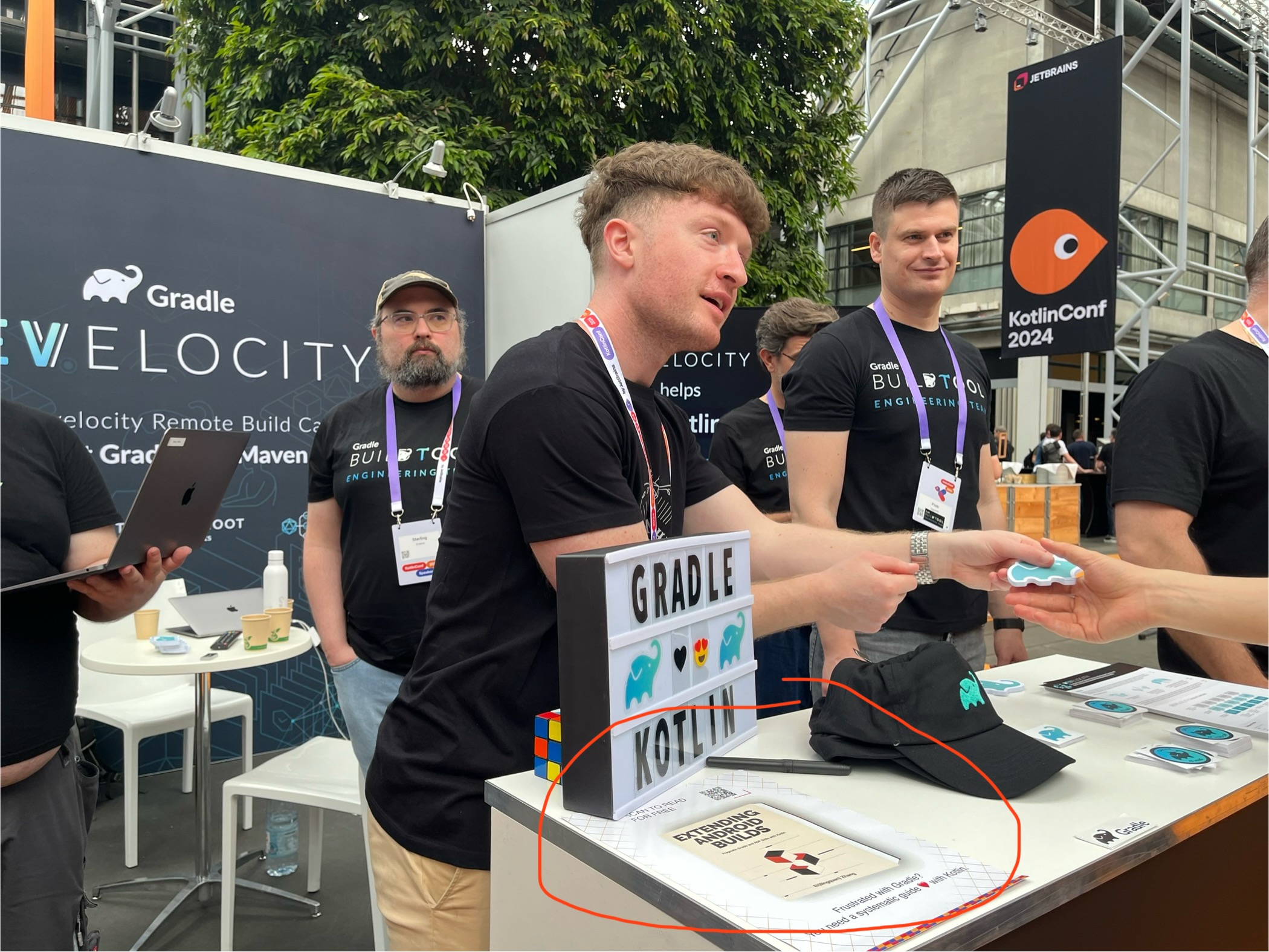
It has been featured by the Gradle team in many ways:
-
Featured in the official Gradle newsletter: The book was highlighted in both the April 2024 issue and the May 2024 issue.
-
Featured at KotlinConf 2024: The official Gradle booth recommended the book to the 3,000 attendees.
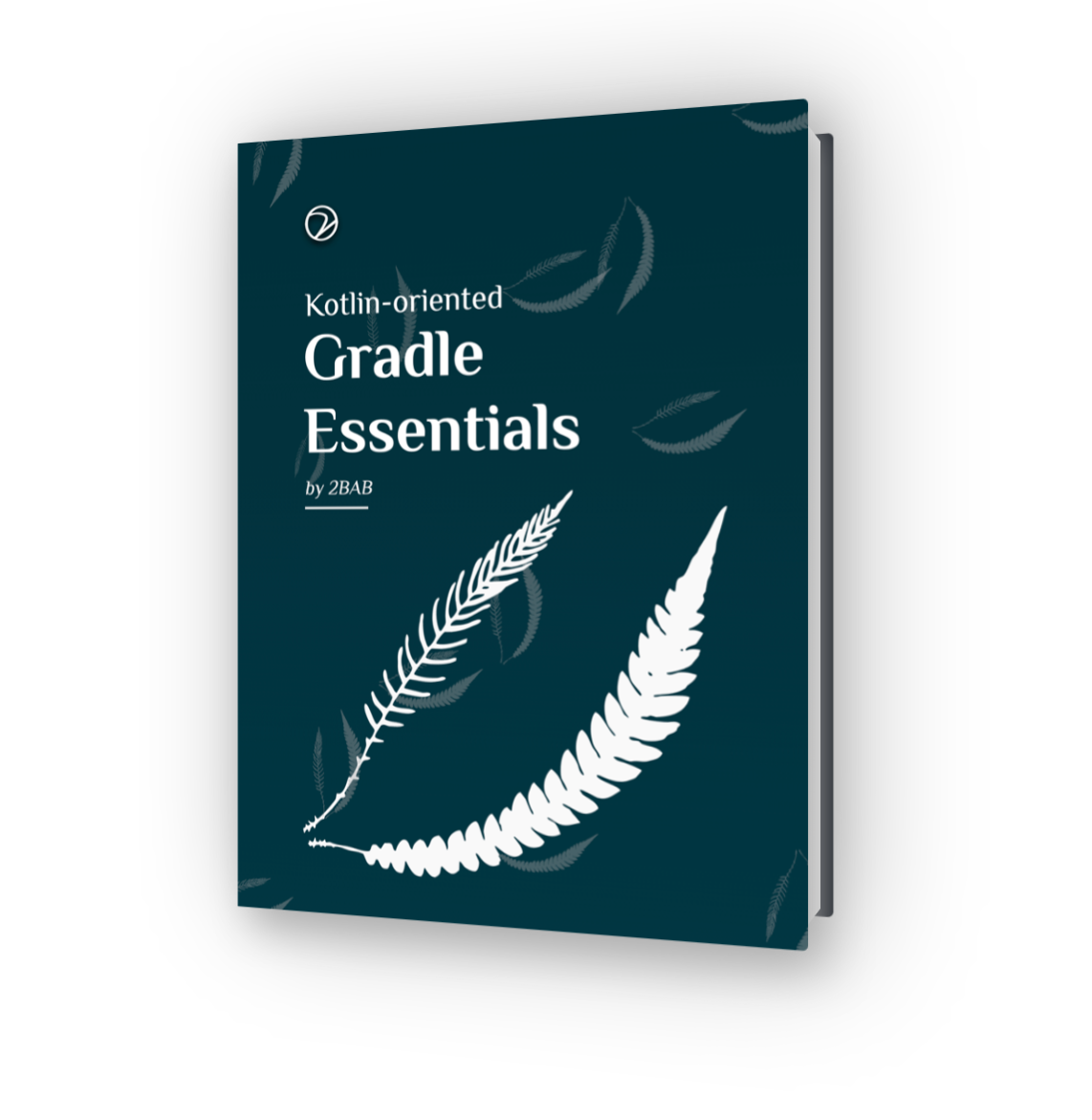
Kotlin-oriented Gradle Essentials
Kotlin-oriented Gradle Essentials (KOGE), a concise self-study handbook for Gradle. It lists a dozen of confusing points for newcomers, points out the learning sequence, and links to appropriate reference materials - from questions, source code, and samples already available on the Internet.
The handbook chooses Kotlin as the language for DSL script and plugin development. The Gradle Kotlin DSL gets excellent support of IDE code completion, active community, as an Android developer I prefer unified workflow on one language for both App and build tools development. The links and use cases in this handbook, while referred to the Android development, are intended to be easy to understand for Gradle users of other platforms as well.
The handbook has been featured by the Gradle team in its newsletter: the May 2024 issue.
KOGE is open-sourced and welcome your PRs, click to READ it now.